
21 Sep, 2026Himanshu Sharma
Monk CI Shield: Security Posture for Your Entire GitHub Org, in One Dashboard
Every finding, every access risk, every branch policy gap across your GitHub org. One dashboard. Zero YAML. Meet Monk CI Shield.
Your security posture isn't just findings.
It's findings, plus who has access to what, plus which repos are missing branch protections. And right now, all three live in different tabs, tools, and spreadsheets. Nobody has the whole picture.
Shield does.
Three Pillars, One Place
Shield answers three questions at once:
Scan. Every PR in every repo, checked for secrets, code vulnerabilities, dependency CVEs, and IaC misconfigs.
Access. Who has write on what. Which teams are overprovisioned. Which stale collaborators still have access. Surfaced on the Teams and Risks pages.
Policy. Which repos are missing branch protections, required reviews, signed commits, or any of the other governance basics. Graded against a checklist so you know exactly where the gaps are.
GHAS covers slices of the first one. Shield covers all three.
What the Dashboard Shows
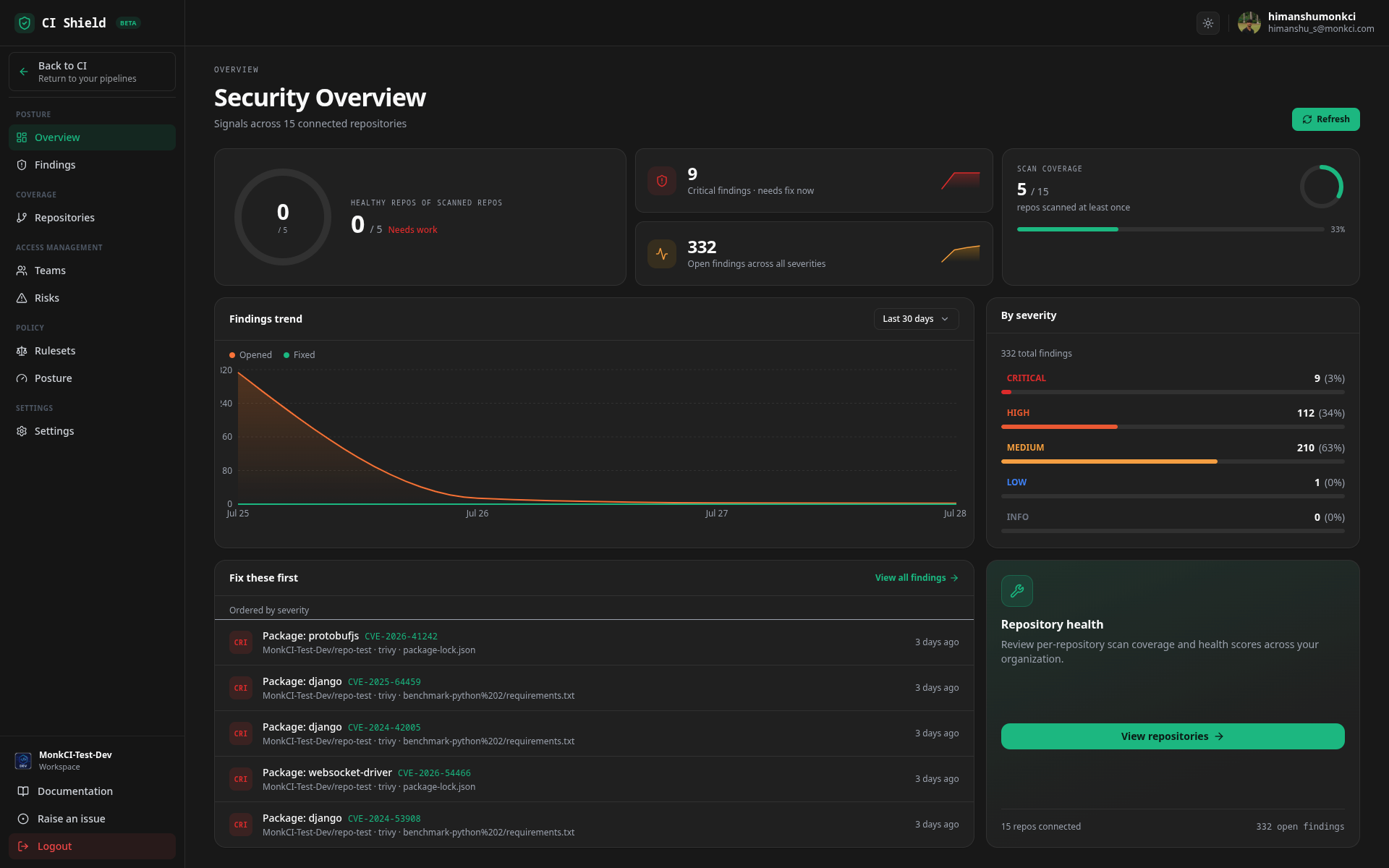
The Overview answers what security leads actually get asked:
- Healthy repos ratio. A single number for your whole org.
- Critical findings, right now. Count leads straight to a prioritized fix list.
- Scan coverage. What percentage of your repos have been scanned at least once.
- Are we winning? A 30-day trend chart of findings opened vs. fixed.
- What do we fix first? Ranked list across every tool and every repo.
Severity breakdown on the right splits it into critical, high, medium, low, and info.
One dashboard. Every question. No spreadsheets.
What About Dependabot and CodeQL?
Already have them running? Shield detects them at onboarding.
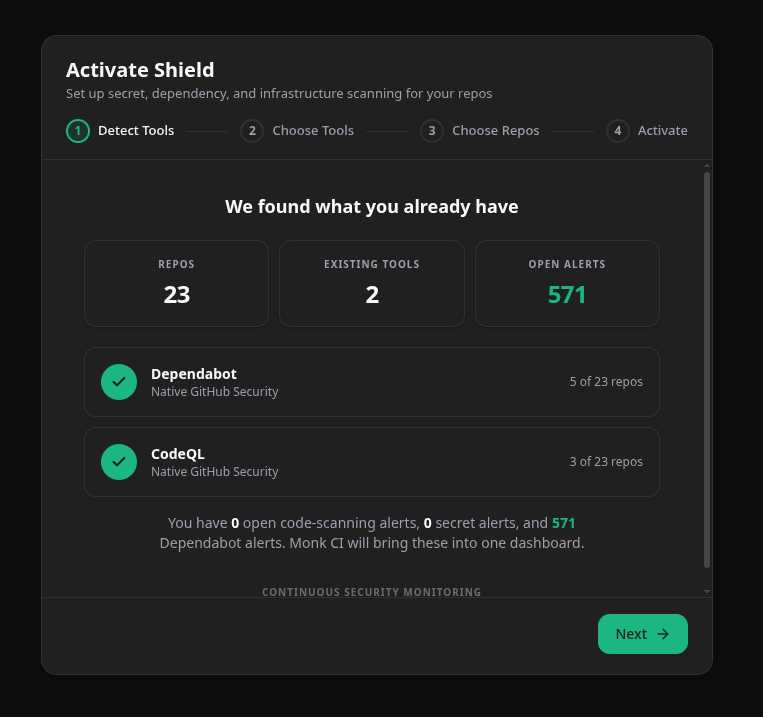
From activation onward, their new alerts flow into the Shield dashboard alongside the four scanners Shield runs itself. Six sources of findings, one severity scale, one place to triage.
Zero YAML in Your Repos
No workflow files. No per-repo setup. No template you're maintaining across 40 repositories.
Shield installs at the org level: it creates a monk-ci repo inside your GitHub org and sets an org-level ruleset that runs the scanners on every PR across every covered repo. New repos your team creates tomorrow are covered automatically. Nothing to remember. Nothing to forget.
Two Surfaces, One Source of Truth
On every PR: developers see one summary comment with pass/fail badges. They fix what matters, ignore what doesn't, push again. The comment updates in place.
In the dashboard: security leads see the org-wide view. Coverage, trends, severity, per-repo health, access risks, policy gaps.
Same findings. Two audiences. Zero context-switching.
Why We Built It
Because we were the customer. Six tools, dozens of repos, four separate PR checks per pull request, and no way to answer "is our security posture actually improving." Shield is what we wished existed.