
Faster GitHub Actions. Same workflows.
Run your existing workflows on high-performance GitHub Actions runners built for faster builds, lower compute costs, and intelligent recovery when jobs fail.
See the Results
25:06min
GitHub Actions
03:03min
Monk CI
Tested on Rust (Helix)


Claim your 5,000 free build minutes
Trusted by fast-moving engineering teams



4x
Faster GitHub Actions cache
3x
Faster compute for your actions
40x
Faster Docker builds
Reach up to 10x speed with your workflow
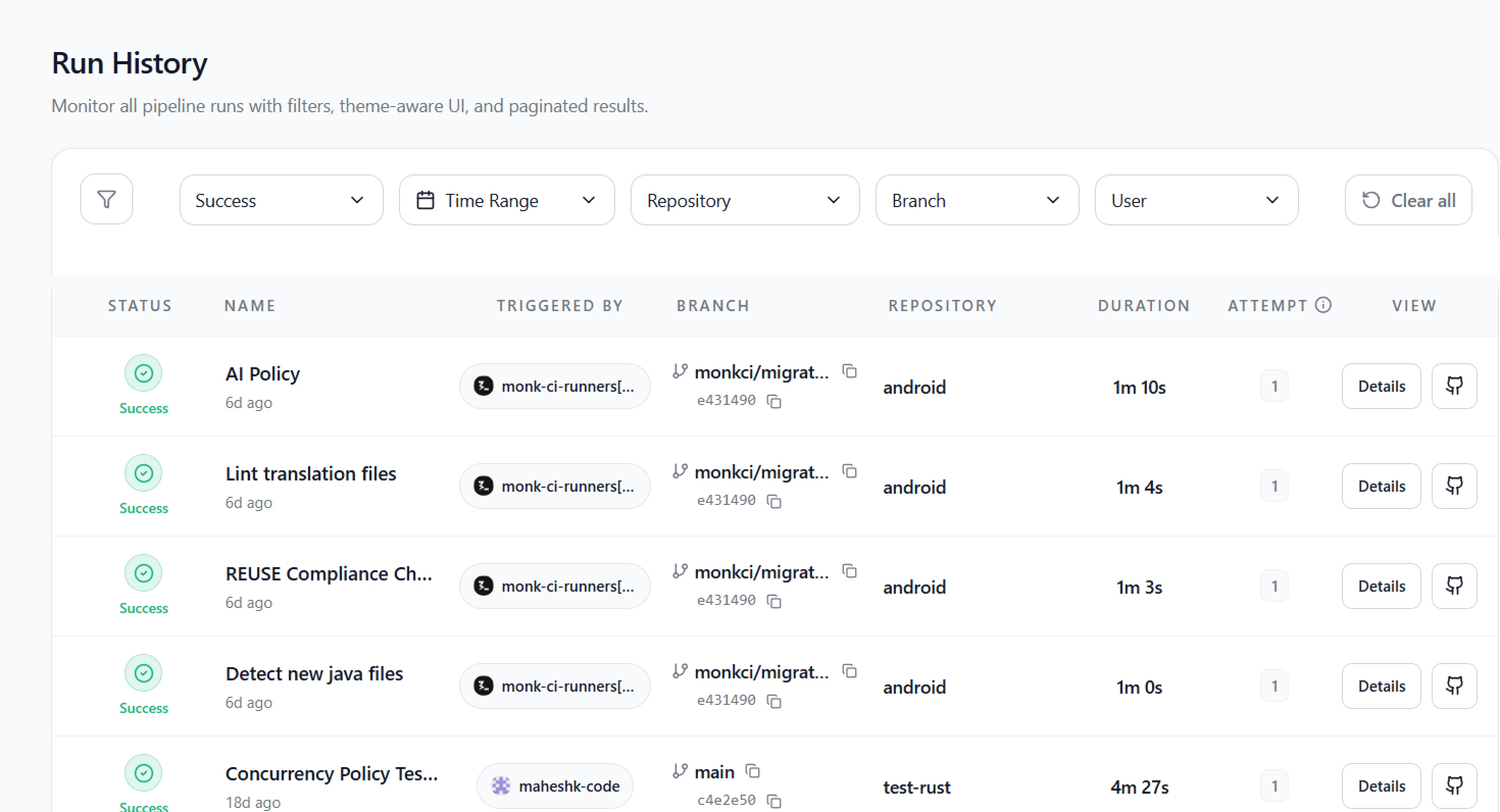
Everything your GitHub Actions workflows need to move faster
Keep your existing YAML, actions, secrets, triggers, and deployment steps. Monk CI replaces the runner infrastructure underneath your workflows and adds faster compute, optimized caching, Docker acceleration, and AI-powered failure recovery.
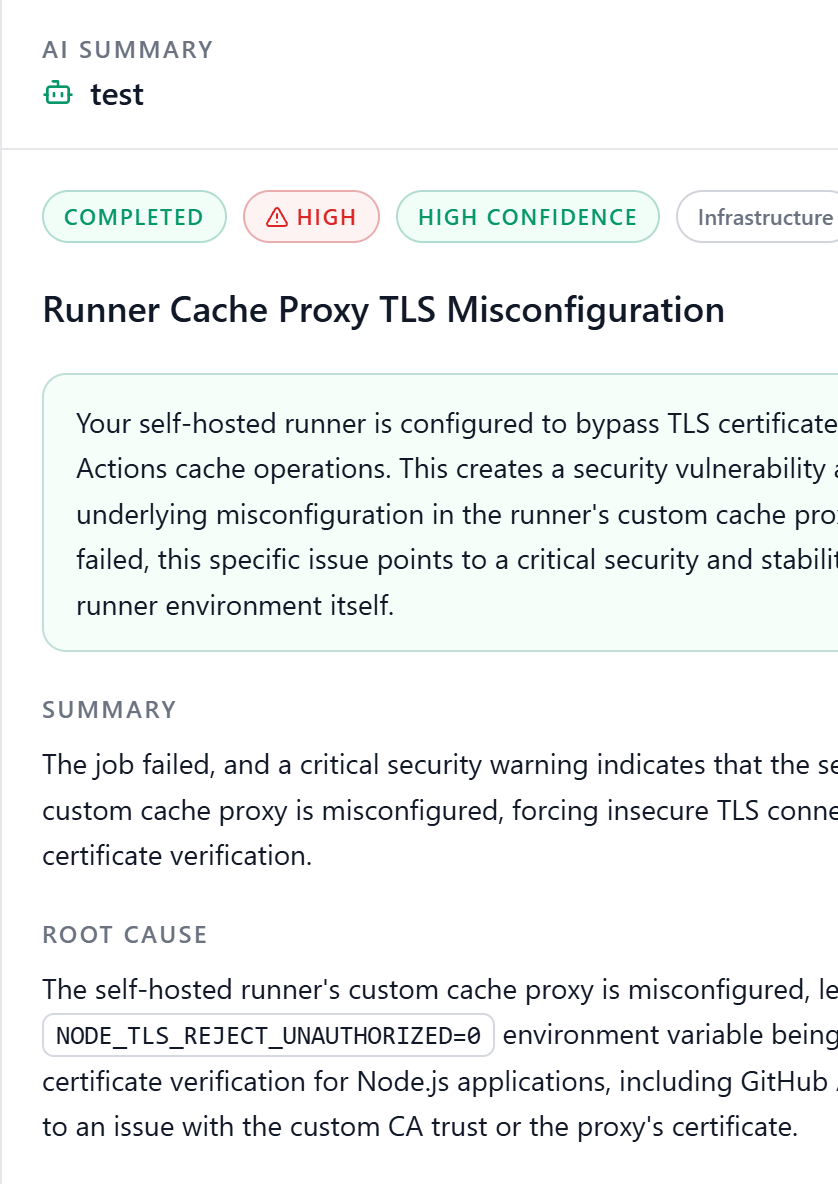
Understand and fix failed CI runs faster
Stop digging through thousands of log lines. Monk CI explains the failure, identifies the likely root cause, and helps your team move from a broken build to a reviewed fix.
Find security and code quality issues before they ship
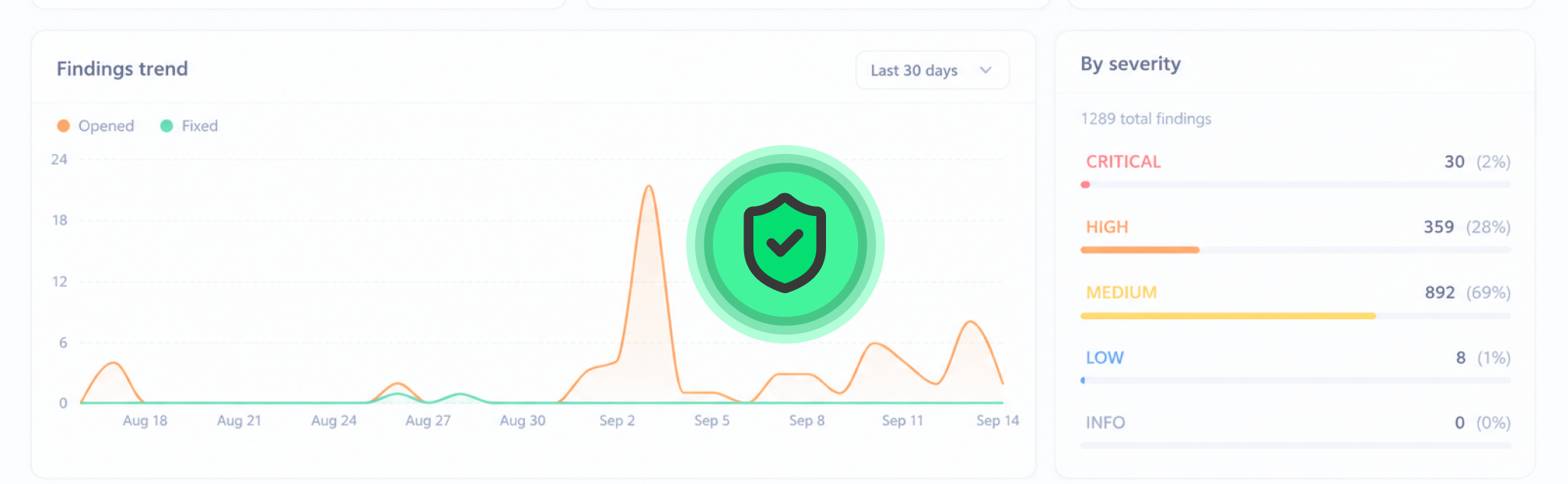
CI Shield brings code quality, dependency, and secret findings into one workflow, helping your team catch risky changes while the pull request is still open.
Compare real open-source workflows: GitHub Linux x64 (4 vCPU, $0.012/min) and Monk CI (32 vCPU, $0.064/min).
GitHub-hosted runner · 4 vCPU
Monk CI · 32 vCPU
Estimated compute cost per build = runtime in minutes × runner rate, before billing rounding, included allowances, or other charges. Faster builds can reduce cost, but savings depend on the workload and runner size.
Build-time improvement
8.2x
19m 26s
Monk CI vs. GitHub-hosted runners
| Capability | Details | Monk CI | GitHub-hosted runners |
|---|---|---|---|
| Existing GitHub Actions workflows | Compatible with your existing workflows, which GitHub-hosted runners run natively. | ||
| Migration | A one-line runs-on change to switch to Monk CI runners. | ||
| High performance compute | Up to 32 vCPUs and 124 GB RAM whereas on GitHub-hosted runners it depends on your plan. | ||
| Action caching | Reuses dependencies between runs via actions/cache, served next to Monk CI runners. | ||
| Docker layer caching | Included. | ||
| AI failure summaries | Included with your AI credits. | ||
| Debug Agent with proposed PR | Included with your AI credits. | ||
| Code, dependency, and secret findings | Available with CI Shield. GitHub-hosted runners need separate tools or setup. | ||
| Job isolation | A clean, isolated VM per job. GitHub-hosted runners isolate each job on a hosted runner. | ||
| Pricing | Transparent pricing. GitHub-hosted pricing varies by OS and machine size. | $ | $$$ |
Got questions? We are here to answer them
What is Monk CI?
Monk CI is the fastest GitHub Actions runner, delivering high performance at a highly competitive cost. It is built for engineering teams that want shorter CI/CD build times without replacing GitHub Actions. You keep your existing GitHub workflows, actions, secrets, triggers, and deployment steps. Monk CI replaces the runner infrastructure underneath GitHub Actions, so your pipelines run on faster cloud runners with optimized caching and Docker build performance. Monk CI has been benchmarked against leading GitHub Actions runner competitors to validate its speed and cost-efficiency claims.
Claim 5,000 free build minutesIs Monk CI a GitHub Actions alternative?
Monk CI is not a full replacement for GitHub Actions. It is a faster alternative to GitHub-hosted runners and other GitHub Actions runner platforms. Your team still uses GitHub Actions for workflows, pull requests, checks, secrets, and automation. Monk CI simply runs those jobs on faster infrastructure, so teams can improve CI/CD performance without migrating to a completely new CI platform.
Try it on one GitHub workflowHow is Monk CI different from GitHub-hosted runners?
GitHub-hosted runners are shared machines with limited compute and slower cache performance. Monk CI provides high performance managed runners designed specifically for CI/CD workloads. Monk CI helps reduce build time using faster compute, optimized action cache restores, Docker layer caching, and better runner availability. This is useful for teams whose GitHub Actions builds take 10, 20, or 40 minutes and slow down engineering velocity.
Benchmark your GitHub Actions buildDo I need to rewrite my GitHub Actions workflows?
No. Monk CI works with your existing GitHub Actions workflows. You only change the runner label in your workflow YAML to monkci-ubuntu-latest for the fastest builds or monkci-ubuntu-24.04-4 for cost optimisation. Your existing GitHub Actions steps, matrix builds, reusable workflows, composite actions, secrets, OIDC tokens, and deployment jobs continue to work as before.
Connect your GitHub organizationHow long does it take to migrate from GitHub Actions runners to Monk CI?
You can get started in seconds with Monk CI’s Migration Wizard. Connect your GitHub organization, select the repositories and jobs you want to migrate, and choose which Monk CI runners to use. The wizard automatically updates the runs-on runner labels in your selected workflows and opens one PR per repository, covering the selected jobs in one go. Review each PR and merge with a click. Your next workflow run uses Monk CI, with no manual workflow edits to worry about.
Start free trialHow does Monk CI pricing compare with GitHub Actions pricing?
For paid Linux x64 runners with 4 vCPU, Monk CI costs $0.008 per minute versus GitHub’s $0.012—33% cheaper per minute. Faster builds can reduce the total cost per build further. Actual savings depend on your workflow and runner size. See our benchmarks for build times and estimated costs.
See build-time and cost benchmarksIs Monk CI benchmarked against other CI runner competitors?
Yes. Monk CI has been benchmarked against leading GitHub Actions runner competitors and standard GitHub-hosted runners across build speed, runner performance, Docker build acceleration, caching, and cost-efficiency. These benchmarks help teams compare Monk CI against other CI/CD runner options before switching.
Talk to an engineerHow Reticle cut its CI build times with Monk CI
The Reticle team explains how moving their GitHub Actions workflows to Monk CI reduced their CI build times.
“Monk CI cut our CI build time from 30 minutes to 5 minutes. We tried multiple solutions, and Monk CI was the fastest. I highly recommend it as an alternative to GitHub Actions runners.”
 Reticle